Automation Playbooks
3-Way Matching in Accounts Payable: Complete Guide 2024
Learn how 3-way matching in accounts payable prevents fraud, reduces errors, and streamlines invoice processing. Complete guide with automation tips.
Managing accounts payable efficiently while maintaining financial controls is a balancing act that every business faces. The 3-way matching in accounts payable process serves as a critical safeguard, ensuring that every payment made aligns with authorized purchases and received goods or services. This systematic verification method has become the gold standard for organizations seeking to minimize fraud risk, maintain compliance, and optimize their financial operations.
What is 3-Way Matching in Accounts Payable?
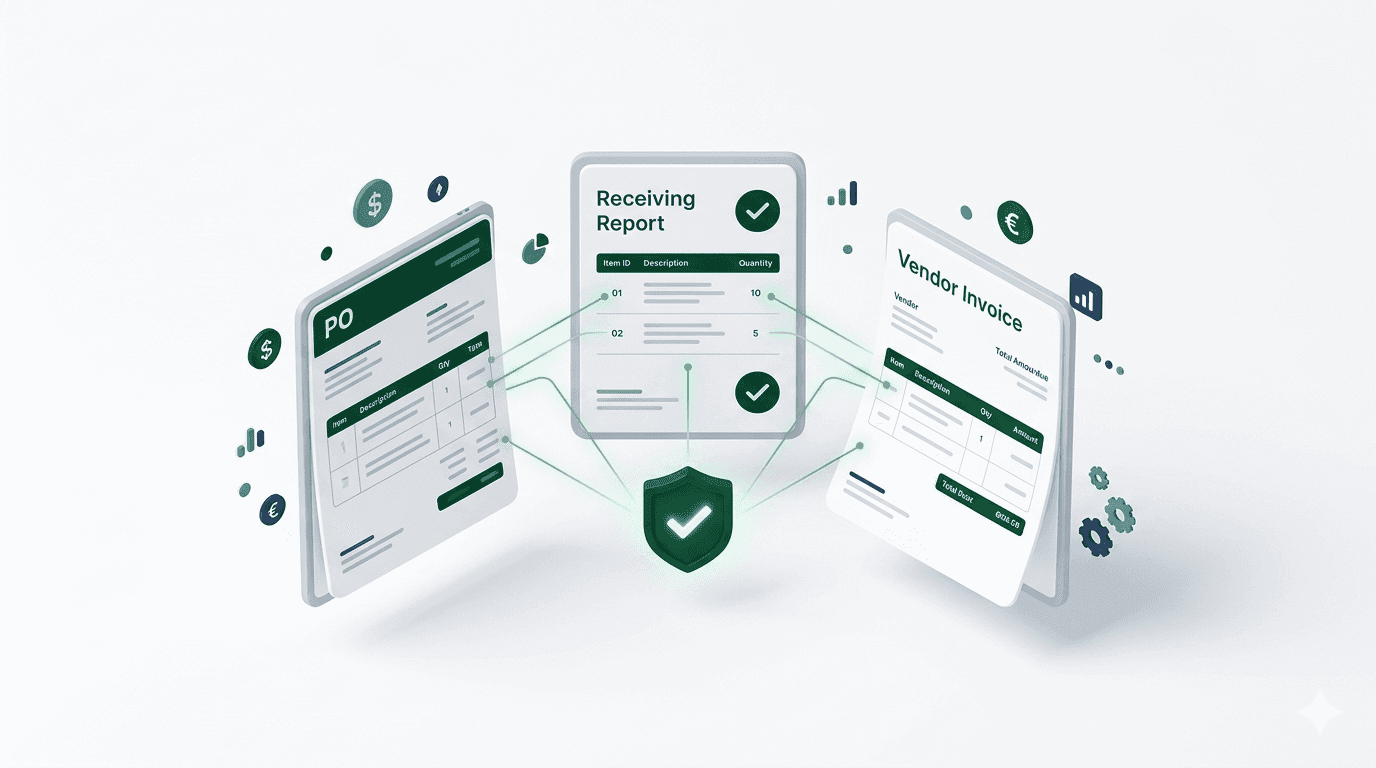
3-way matching in accounts payable is a verification process that compares three essential documents before authorizing payment to vendors: the purchase order (PO), goods receipt (or receiving report), and vendor invoice. This triangulation ensures that businesses only pay for goods or services that were properly authorized, actually received, and correctly invoiced.
The three documents serve distinct purposes in the verification chain:
Purchase Order: Represents the authorized request to purchase specific goods or services at agreed-upon terms
Goods Receipt: Confirms that the ordered items were physically received and meet quality standards
Vendor Invoice: Requests payment for the delivered goods or services
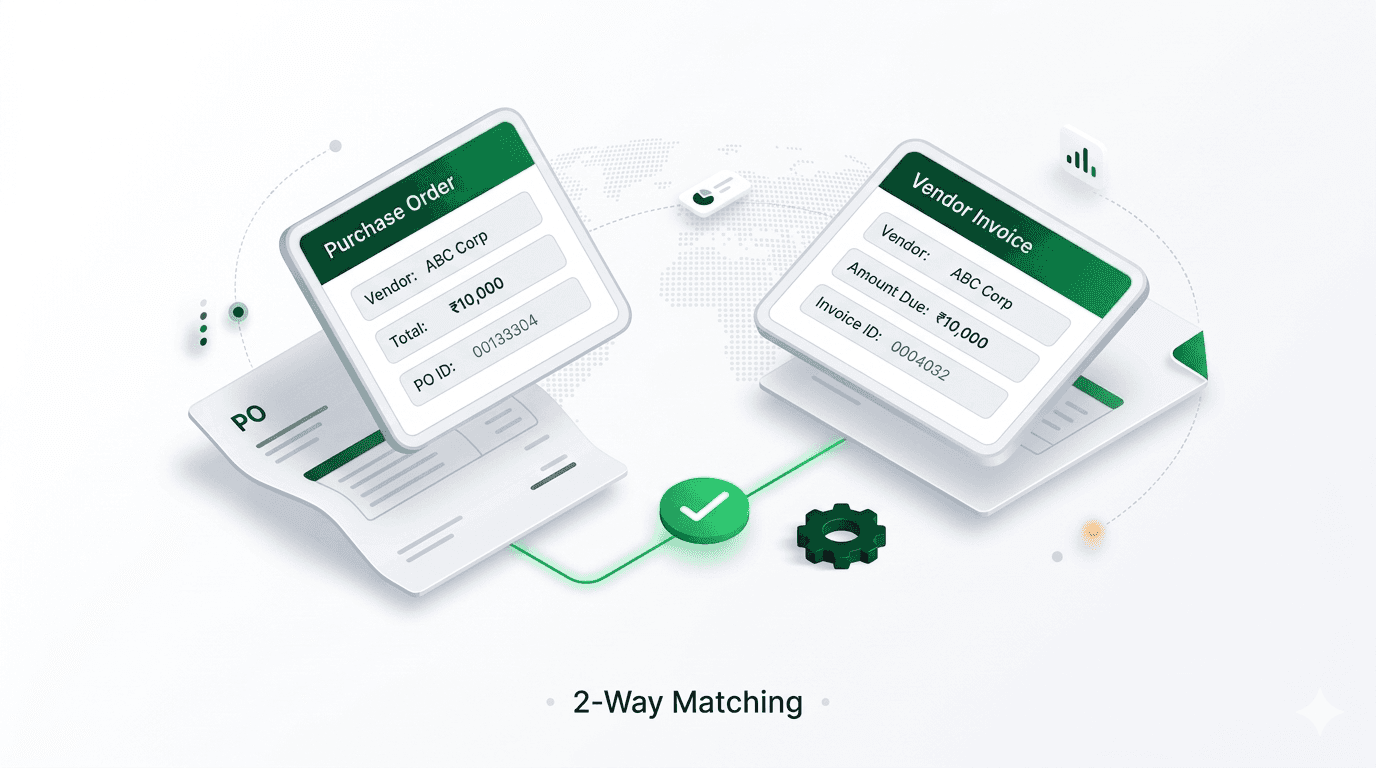
Unlike 2-way matching, which only verifies the purchase order against the invoice, 3-way matching adds the crucial step of confirming actual receipt. This additional layer significantly reduces the risk of paying for undelivered goods or services, making it particularly valuable for businesses dealing with physical inventory or complex service agreements.
The process serves as a cornerstone of internal financial controls, providing audit trails that satisfy regulatory requirements and support compliance frameworks like Sarbanes-Oxley. Organizations implementing robust 3-way matching procedures demonstrate commitment to financial transparency and operational integrity.
The 3-Way Matching Process: Step-by-Step Breakdown
The 3-way matching workflow begins when a department identifies a need for goods or services. The requesting department creates a purchase order detailing specifications, quantities, prices, and delivery terms. This PO requires appropriate authorization based on the organization's approval hierarchy and spending limits.
Once goods arrive or services are completed, the receiving department generates a goods receipt document. This step involves physical verification of quantities, quality inspection, and confirmation that deliveries match PO specifications. The receiving team documents any discrepancies, damages, or partial shipments.
When the vendor invoice arrives, accounts payable staff initiate the matching process. They systematically compare invoice details against both the purchase order and goods receipt, verifying that quantities, prices, terms, and other critical data points align within acceptable tolerance levels.
After successful matching, the invoice enters the approval workflow. Designated approvers review the matched documents and authorize payment based on the organization's segregation of duties policies. The system then schedules payment according to agreed-upon terms, optimizing cash flow while maintaining vendor relationships.
Exception handling procedures activate when documents don't match within established parameters. These exceptions require investigation, which may involve contacting vendors, reviewing delivery documentation, or escalating to management for resolution.
Document Verification Requirements
Effective 3-way matching requires precise verification of key data points across all three documents. Critical matching elements include vendor information, item descriptions, quantities, unit prices, extended amounts, tax calculations, and delivery dates.
Organizations typically establish tolerance levels to accommodate minor variances that don't indicate errors or fraud. Common tolerances include 5-10% variance for quantities and 2-5% variance for pricing, though these thresholds should align with business risk tolerance and industry standards.
The approval process must maintain clear segregation of duties, ensuring that different individuals handle purchase authorization, goods receipt, and payment approval. This separation prevents collusion and strengthens internal controls.
Why 3-Way Matching is Critical for Modern Businesses
Fraud prevention stands as the primary driver for implementing comprehensive 3-way matching procedures. The Association of Certified Fraud Examiners reports that billing fraud accounts for over 20% of occupational fraud cases, with median losses exceeding $100,000. By requiring verification of actual receipt before payment, 3-way matching eliminates opportunities for fictitious billing schemes.
Regulatory compliance requirements increasingly demand robust financial controls and audit trails. Public companies must demonstrate adequate internal controls over financial reporting, while government contractors face specific procurement regulations. The documented 3-way matching process provides evidence of due diligence and control effectiveness.
Vendor relationship management benefits significantly from systematic matching procedures. Clear documentation reduces payment disputes, ensures accurate vendor records, and supports performance evaluations. Vendors appreciate predictable payment processes and transparent communication about discrepancies.
Cash flow optimization results from better visibility into payment obligations and timing. Organizations can accurately forecast cash needs, take advantage of early payment discounts when beneficial, and avoid late payment penalties. The systematic approach also prevents duplicate payments and overpayments.
Establishing comprehensive audit trails supports both internal audits and external examinations. Regulators, auditors, and stakeholders can trace transactions from authorization through payment, demonstrating financial control effectiveness and operational transparency.
Common Challenges with Manual 3-Way Matching
Manual 3-way matching processes consume significant staff time, with finance teams spending hours locating documents, performing comparisons, and resolving discrepancies. Studies indicate that processing a single invoice manually can take 15-20 minutes, extending to hours when exceptions arise.
Human error introduces substantial risk into manual processes. Data entry mistakes, calculation errors, and oversight failures can result in incorrect payments, duplicate transactions, or missed discrepancies. The repetitive nature of document comparison increases the likelihood of attention lapses.
Document mismatches and exceptions create bottlenecks that delay payment processing. Manual investigation of variances requires significant effort, often involving multiple departments and extended communication cycles. These delays can strain vendor relationships and result in late payment penalties.
Lack of real-time visibility into processing status creates challenges for cash flow management and vendor inquiries. Finance teams struggle to provide accurate payment timelines, while management lacks insight into process efficiency and exception rates.
Paper-based processes compound these challenges through document loss, filing errors, and limited accessibility. Remote work environments have highlighted the inefficiencies of physical document handling and manual approval workflows.
Automating 3-Way Matching: Technology Solutions
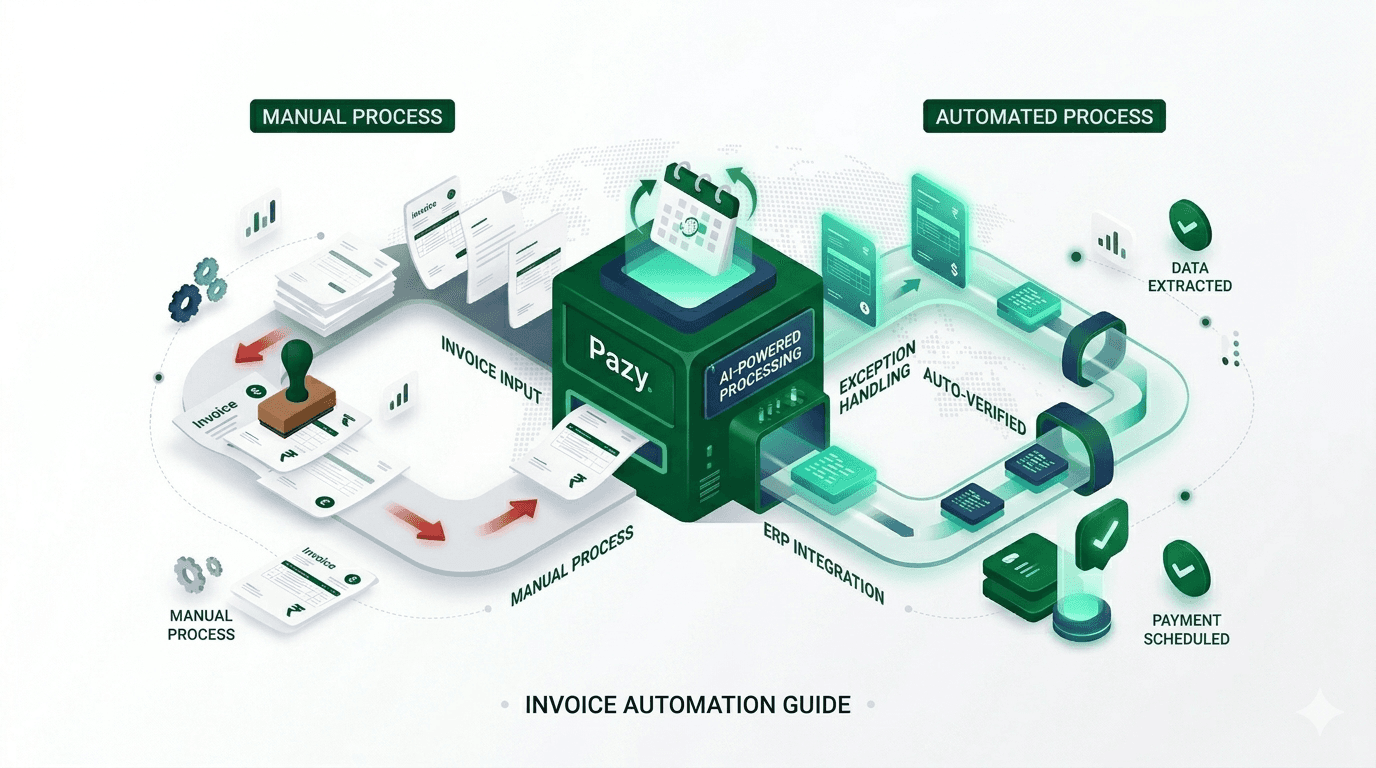
Modern accounts payable automation platforms leverage artificial intelligence and machine learning to streamline 3-way matching in accounts payable processes. These systems can automatically extract data from invoices, purchase orders, and receipts, performing initial matching without human intervention.
ERP integration capabilities ensure seamless data flow between procurement, receiving, and accounts payable modules. Real-time synchronization eliminates data silos and provides comprehensive visibility into the entire procure-to-pay process.
Optical Character Recognition (OCR) and intelligent data extraction technologies convert paper documents and PDFs into structured data. Advanced systems can handle various document formats, languages, and layouts while continuously improving accuracy through machine learning.
Workflow automation features route matched invoices for approval based on predefined rules and approval hierarchies. Mobile capabilities enable approvers to review and authorize payments from anywhere, accelerating processing times and improving responsiveness.
Real-time matching and exception alerts notify relevant stakeholders immediately when discrepancies arise. Automated escalation procedures ensure timely resolution while maintaining audit trails of all actions and decisions.
Key Features to Look for in AP Automation Platforms
Intelligent matching algorithms should handle complex scenarios including partial deliveries, multiple invoices per purchase order, and various unit of measure conversions. The system should learn from user corrections to improve future matching accuracy.
Customizable tolerance settings allow organizations to define acceptable variance levels for different vendors, product categories, or transaction types. Flexible configuration ensures the system aligns with business requirements and risk tolerance.
Mobile approval capabilities enable stakeholders to review documents, approve payments, and resolve exceptions from smartphones or tablets. Offline functionality ensures continuity even when internet connectivity is limited.
Analytics and reporting dashboards provide insights into processing times, exception rates, vendor performance, and cost savings. Customizable reports support management decision-making and compliance reporting requirements.
Best Practices for Implementing 3-Way Matching
Setting appropriate tolerance thresholds requires balancing control objectives with operational efficiency. Organizations should analyze historical variance patterns and industry benchmarks to establish realistic parameters that catch meaningful discrepancies without generating excessive exceptions.
Staff training programs must cover both process procedures and technology usage. Comprehensive training should address exception handling, escalation procedures, and the business rationale for controls. Regular refresher sessions ensure consistent application and adaptation to process improvements.
Clear exception handling procedures should define investigation steps, escalation timelines, and resolution authority. Documented procedures ensure consistent treatment of discrepancies and support audit requirements.
Regular process audits and improvements help identify bottlenecks, control weaknesses, and optimization opportunities. Organizations should establish metrics for processing times, accuracy rates, and exception resolution to drive continuous improvement.
Vendor communication protocols should inform suppliers about matching requirements, tolerance levels, and documentation standards. Clear communication reduces invoice rejections and strengthens vendor relationships.
Measuring Success: KPIs and ROI of 3-Way Matching
Processing time reduction represents a primary success metric, with automated systems typically reducing invoice processing time by 60-80%. Organizations should track average processing time per invoice and exception resolution time to quantify improvements.
Error rate improvements demonstrate control effectiveness, with successful implementations achieving 90%+ accuracy rates. Tracking duplicate payments, overpayments, and fraud incidents provides concrete evidence of control value.
Cost savings calculations should include reduced processing costs, eliminated duplicate payments, captured early payment discounts, and avoided late payment penalties. Many organizations achieve ROI within 12-18 months of implementation.
Compliance score enhancements reflect improved audit findings and regulatory examination results. Organizations should track internal audit recommendations and external examination findings to demonstrate control effectiveness.
Vendor satisfaction improvements can be measured through payment timeliness, dispute resolution speed, and vendor feedback surveys. Improved vendor relationships often lead to better pricing and terms.
Frequently Asked Questions About 3-Way Matching
What is the difference between 2-way and 3-way matching?
2-way matching compares only the purchase order and invoice, while 3-way matching adds verification of goods receipt. The additional step confirms that ordered items were actually received before authorizing payment, providing stronger fraud protection and control.
How long does the 3-way matching process typically take?
Manual processes can take 15-30 minutes per invoice, extending to several hours for complex exceptions. Automated systems reduce processing time to 2-5 minutes for straightforward matches, with exception handling taking additional time based on complexity.
What happens when documents don't match in 3-way matching?
Mismatches trigger exception workflows that require investigation and resolution. Common causes include pricing discrepancies, quantity variances, or data entry errors. The exception is routed to appropriate personnel for review and corrective action.
Is 3-way matching required by law or regulation?
While not universally mandated, many regulations require adequate internal controls over financial reporting. Government contractors often face specific procurement requirements, and public companies must demonstrate effective controls under Sarbanes-Oxley.
Can small businesses benefit from 3-way matching?
Small businesses can benefit significantly from 3-way matching, particularly as they grow and face increased fraud risk. Cloud-based automation solutions make implementation affordable and scalable for smaller organizations.
What are the costs associated with implementing 3-way matching?
Implementation costs vary based on organization size and solution complexity. Manual processes require primarily staff time, while automated solutions involve software licensing, implementation services, and training costs. ROI typically occurs within 12-24 months.
How does automation improve the 3-way matching process?
Automation reduces processing time, eliminates data entry errors, provides real-time visibility, and enables consistent application of matching rules. AI-powered systems can handle complex scenarios and continuously improve accuracy through machine learning.
Implementing robust 3-way matching in accounts payable processes represents a strategic investment in financial control and operational efficiency. Organizations that embrace systematic verification procedures and supporting technology solutions position themselves for sustainable growth while maintaining stakeholder trust and regulatory compliance. The combination of strong controls, efficient processes, and clear metrics creates a foundation for financial excellence that supports long-term business success.
OTHER BLOGS