Automation Playbooks
Petty Cash Book: Complete Guide for Indian Businesses
Master petty cash book management in India. Learn formats, GST compliance, digital alternatives & best practices. Streamline your finance operations today.
# Petty Cash Book: Complete Guide for Indian Businesses
A recent study by the Institute of Chartered Accountants of India revealed that 78% of small and medium enterprises struggle with tracking minor expenses, leading to significant financial discrepancies. The petty cash book emerges as a critical accounting tool that bridges this gap, ensuring every rupee spent is accounted for while maintaining compliance with Indian regulations.
What is a Petty Cash Book?
A petty cash book serves as a specialised subsidiary ledger that records all small-value cash transactions in Indian businesses. Unlike the main cash book that handles substantial receipts and payments, this focused register captures day-to-day operational expenses typically ranging from ₹10 to ₹5,000 per transaction.
In the Indian accounting framework, the petty cash book operates as one of the essential subsidiary books of accounts, working alongside purchase books, sales books, and journals. This segregation allows businesses to maintain detailed records without cluttering the main cash book with numerous small entries.
The fundamental difference between a petty cash book and the main cash book lies in transaction value and frequency. While the main cash book records bank deposits, major supplier payments, and significant receipts, the petty cash book focuses on immediate operational needs like office supplies, local transportation, and refreshments.
Under Indian accounting standards, particularly AS-1 (Disclosure of Accounting Policies) and the Companies Act 2013, businesses must maintain proper books of account. The petty cash book fulfills this requirement by providing a clear audit trail for all minor cash transactions, ensuring transparency and accountability in financial reporting.
Types of Petty Cash Book Systems in India
Indian businesses typically employ four distinct petty cash book systems, each designed to meet specific operational requirements and compliance needs.
The ordinary petty cash book format represents the most basic approach, featuring simple columns for date, particulars, voucher numbers, and amounts. This method suits small businesses with minimal cash transactions and straightforward expense patterns.
The imprest system petty cash book offers enhanced control mechanisms, where a fixed amount is allocated to the petty cashier at the beginning of each period. This system ensures better expense management and reduces the risk of cash shortages or misappropriation.
Analytical petty cash books incorporate multiple expense categories with dedicated columns for different types of expenditure. Modern versions include GST columns to facilitate input tax credit claims and ensure compliance with the Goods and Services Tax framework.
Digital petty cash management systems represent the evolution of traditional bookkeeping, integrating with accounting software like Tally ERP, SAP, and cloud-based solutions. These systems automate calculations, generate reports, and maintain digital audit trails while ensuring real-time visibility into cash positions.
Imprest System vs Traditional Method
The imprest system operates on a revolutionary principle where the petty cashier receives a predetermined amount at the start of each period, typically ₹5,000 to ₹25,000 depending on business size and expense patterns. As expenses occur, the cashier makes payments and collects supporting vouchers. At period-end, the total expenses are reimbursed, restoring the fund to its original amount.
This system provides superior expense control compared to traditional methods where cash is provided on an ad-hoc basis. Finance teams can predict cash requirements more accurately, while the fixed fund limit prevents excessive spending and encourages prudent expense management.
The reimbursement process requires comprehensive documentation, including original bills, receipts, and properly authorised petty cash vouchers. This documentation not only ensures accountability but also supports GST compliance and input tax credit claims where applicable.
Petty Cash Book Format and Columns
A comprehensive petty cash book format for Indian businesses includes several essential columns designed to capture all relevant transaction details while ensuring regulatory compliance.
The standard format begins with date columns (day, month, year) followed by voucher numbers that create a sequential audit trail. The particulars column provides detailed descriptions of each expense, while receipt and payment columns track cash inflows and outflows respectively.
Modern petty cash books incorporate GST-specific columns including CGST, SGST, and IGST amounts, enabling businesses to calculate input tax credits accurately. Additional columns for HSN codes and supplier GSTIN numbers further enhance compliance capabilities.
Here's a sample format structure:
**Date | Voucher No. | Particulars | Receipt (₹) | Payment (₹) | CGST (₹) | SGST (₹) | IGST (₹) | Balance (₹)**
The balance calculation follows the principle: Opening Balance + Receipts - Payments = Closing Balance. This running balance provides immediate visibility into available cash and helps prevent overdrafts.
For instance, if the opening balance is ₹10,000, and during the day there are payments totaling ₹2,500 with no receipts, the closing balance would be ₹7,500. This real-time tracking enables better cash flow management and prevents situations where insufficient funds might delay critical operations.
GST Compliance for Petty Cash Transactions
GST compliance for petty cash transactions requires meticulous attention to documentation and proper categorisation of expenses. Under the GST framework, businesses can claim input tax credit on petty cash expenses provided they meet specific eligibility criteria.
The primary requirement is obtaining proper tax invoices or bills from GST-registered suppliers. For expenses below ₹200, businesses can claim input tax credit without requiring invoices, but amounts must be supported by vouchers or other documentary evidence as prescribed under GST rules.
Input tax credit eligibility depends on the nature of expenses. Office supplies, equipment maintenance, and business-related transportation qualify for credit claims, while personal expenses, entertainment beyond prescribed limits, and certain services remain ineligible.
Documentation requirements include maintaining original invoices, ensuring supplier GSTIN verification, and recording HSN codes where applicable. The CGST Rules 2017 specify that input tax credit can be claimed only when supporting documents are available and properly maintained.
GSTR filing considerations require businesses to include eligible petty cash expenses in their monthly or quarterly returns. The expenses must be reflected in GSTR-3B under appropriate categories, while detailed transaction data should be available for potential audits or scrutiny by tax authorities.
Common Petty Cash Expenses in Indian Businesses
Indian businesses typically encounter several recurring expense categories that are ideally suited for petty cash management, each with specific compliance and documentation requirements.
Office supplies and stationery represent the largest category, including pens, paper, files, and basic equipment. These purchases often occur from local vendors and require immediate payment, making petty cash the most practical payment method.
Tea, coffee, and refreshments constitute another significant expense category, particularly in businesses that provide complimentary beverages to employees and visitors. These expenses require careful monitoring to distinguish between employee welfare (which has tax implications) and business entertainment.
Local transportation costs, including auto-rickshaw fares, taxi charges, and parking fees, frequently arise during business operations. These expenses support business activities like client meetings, bank visits, and supply procurement, making them legitimate business expenses eligible for tax deductions.
Courier and postal charges represent essential communication expenses that often require immediate cash payments. With the growth of e-commerce and digital business, these expenses have become more frequent and require proper documentation for GST compliance.
Minor repairs and maintenance activities, such as electrical work, plumbing, or equipment servicing, often demand immediate cash payments. These expenses typically range from ₹500 to ₹5,000 and play a crucial role in maintaining business operations.
Entertainment expenses require special attention due to regulatory limits and tax implications. Under Indian tax laws, entertainment expenses are generally not deductible, except for specific categories like employee recreation and client entertainment within prescribed limits.
Step-by-Step Process for Maintaining Petty Cash Book
Establishing an effective petty cash book system requires systematic implementation of processes that ensure accuracy, compliance, and accountability throughout the organisation.
Setting up the initial petty cash fund begins with determining appropriate fund size based on historical expense patterns and business requirements. Most Indian SMEs maintain funds between ₹5,000 to ₹25,000, while larger organisations might require ₹50,000 or more depending on operational needs.
Daily recording procedures involve capturing every transaction immediately after occurrence, including date, amount, purpose, and supporting documentation. The petty cashier must verify that all expenses align with company policies and obtain proper approvals before making payments.
Monthly reconciliation processes ensure accuracy and identify discrepancies early. This involves comparing physical cash with book balances, verifying supporting documents, and investigating any variances. Regular reconciliation prevents accumulation of errors and maintains system integrity.
Replenishment procedures restore the fund to its original amount based on documented expenses. The finance team reviews all supporting vouchers, verifies compliance with company policies, and processes reimbursement through appropriate accounting entries.
Documentation and Voucher Management
Proper documentation forms the backbone of effective petty cash management, ensuring audit trails and regulatory compliance while preventing fraud and misappropriation.
Required supporting documents include original bills, receipts, delivery challans, and service completion certificates. For GST-registered transactions, proper tax invoices with supplier GSTIN, HSN codes, and tax breakdowns are mandatory.
The petty cash voucher format should include essential fields like date, amount, purpose, supporting document references, and authorisation signatures. Sequential numbering creates audit trails while duplicate copies provide backup records for accounting purposes.
Approval hierarchy for expenses ensures proper authorisation and prevents unauthorised spending. Typically, expenses below ₹500 require petty cashier approval, amounts between ₹500-₹2,000 need supervisor consent, while higher amounts require management authorisation.
Digital documentation best practices involve scanning physical receipts, maintaining cloud backups, and implementing access controls. This approach ensures document preservation while enabling remote access and reducing physical storage requirements.
Benefits and Challenges of Petty Cash Books
Implementing petty cash books offers significant advantages for Indian businesses while presenting certain challenges that require careful management and mitigation strategies.
The primary advantage lies in comprehensive expense tracking, enabling businesses to monitor every rupee spent on operational activities. This visibility supports better budgeting, identifies cost-saving opportunities, and ensures compliance with internal policies and external regulations.
Cash flow management benefits include predictable funding requirements, reduced bank transaction costs, and immediate payment capabilities for urgent expenses. The imprest system particularly enhances cash flow predictability by establishing fixed funding cycles and amounts.
However, manual processes introduce error risks, including calculation mistakes, data entry errors, and misplaced documentation. These challenges can lead to reconciliation difficulties and potential compliance issues if not addressed systematically.
Fraud risks represent another significant challenge, particularly in organisations with inadequate controls or oversight. Common fraud schemes include fictitious expenses, inflated amounts, and unauthorised personal expenses disguised as business costs.
Time consumption in manual processes affects productivity and increases administrative costs. Recording transactions, filing documents, and performing reconciliations require dedicated resources that could be deployed more strategically in automated systems.
GST compliance requirements add complexity to traditional petty cash management, requiring additional documentation, categorisation, and reporting activities. Non-compliance can result in penalties, interest charges, and potential legal consequences.
Digital Alternatives to Traditional Petty Cash Books
The digital transformation of petty cash management offers Indian businesses sophisticated alternatives that address traditional challenges while enhancing efficiency and compliance capabilities.
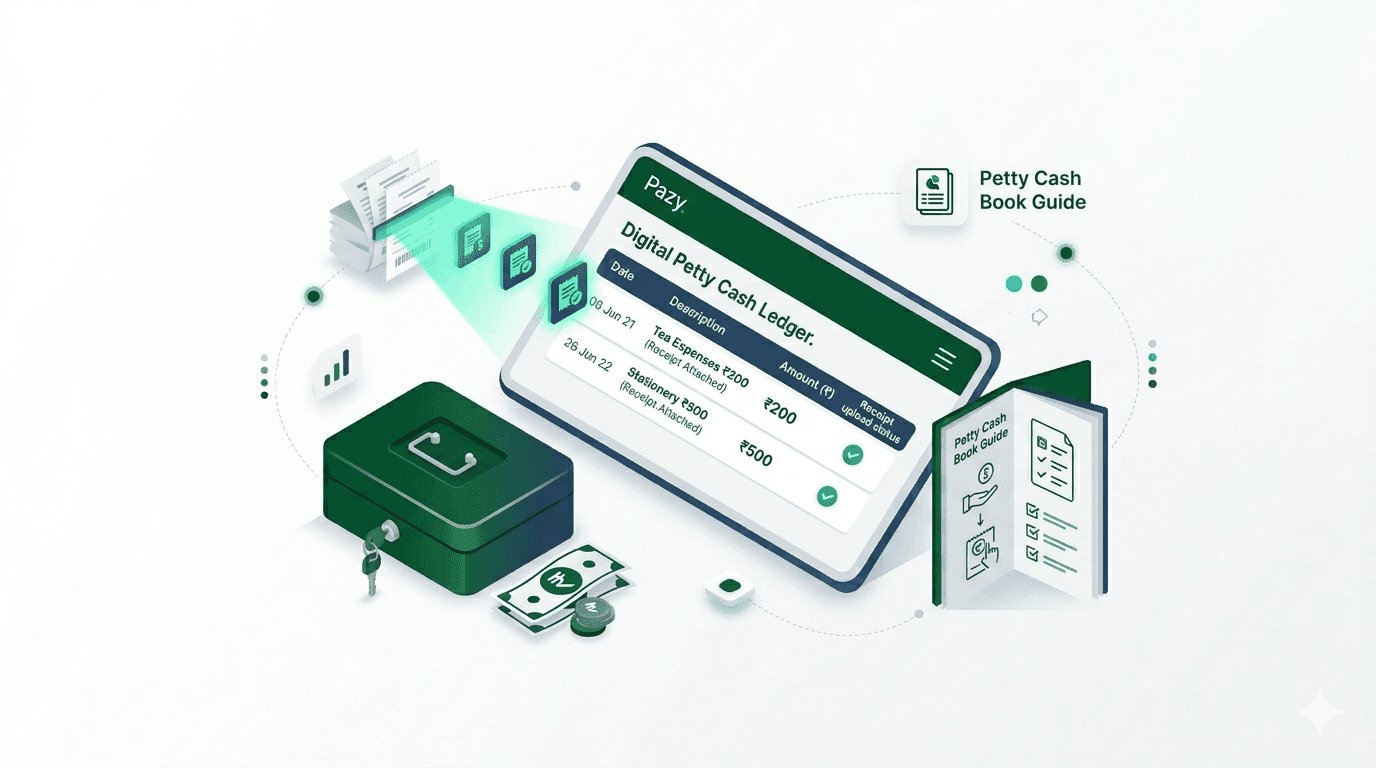
Modern expense management software solutions provide comprehensive platforms that digitise the entire petty cash lifecycle, from expense capture to reimbursement and reporting. These systems integrate with existing accounting software and provide real-time visibility into cash positions and expense patterns.
UPI and digital payment integration enables immediate payments without physical cash handling, reducing security risks and improving transaction tracking. Popular platforms like Google Pay, PhonePe, and Paytm for Business offer detailed transaction histories and automated receipt generation.
Automated GST compliance features eliminate manual calculations and ensure accurate tax reporting. These systems automatically categorise expenses, calculate applicable taxes, and generate reports formatted for GST return filing, significantly reducing compliance burden.
Real-time reporting and analytics capabilities provide management with instant access to expense data, enabling better decision-making and cost control. Dashboard views highlight spending patterns, budget variances, and compliance status across different expense categories.
Integration with ERP systems like Tally, SAP, and QuickBooks ensures seamless data flow between expense management and accounting systems. This integration eliminates duplicate data entry while maintaining consistency across financial records.
How Pazy Transforms Petty Cash Management
Pazy's intelligent expense management platform revolutionises traditional petty cash processes through advanced automation and compliance features specifically designed for Indian businesses.
Automated expense categorisation uses machine learning to classify expenses accurately, reducing manual effort while ensuring consistent categorisation across the organisation. The system learns from historical data and user corrections to improve accuracy over time.
GST compliance automation eliminates the complexity of tax calculations and documentation requirements. Pazy's platform automatically identifies GST-applicable expenses, calculates taxes, and maintains compliant documentation for audit purposes.
Real-time visibility empowers finance teams with instant access to expense data, pending approvals, and cash positions across multiple locations or departments. This transparency enables proactive cash management and prevents operational disruptions due to insufficient funds.
Integration capabilities ensure seamless connectivity with existing accounting systems, eliminating data silos and maintaining consistency across financial processes. The platform supports popular Indian accounting software including Tally ERP, ensuring smooth implementation without disrupting existing workflows.
Best Practices for Petty Cash Management in India
Implementing effective petty cash management requires adherence to established best practices that ensure compliance, security, and operational efficiency while supporting business growth objectives.
Setting appropriate cash limits requires careful analysis of expense patterns and business requirements. Most Indian businesses find optimal results with limits between ₹5,000 to ₹25,000, though manufacturing units or businesses with high operational expenses might require larger amounts.
Regular auditing and reconciliation schedules prevent accumulation of errors and identify potential issues early. Monthly reconciliations represent the minimum frequency, while weekly reviews provide enhanced control for high-volume businesses.
Segregation of duties ensures that no single individual controls the entire petty cash process. Ideally, different people should handle cash custody, record keeping, and reconciliation activities to prevent fraud and errors.
Transition planning to digital systems should occur gradually, allowing staff to adapt to new processes while maintaining operational continuity. Pilot implementations in specific departments or locations enable refinement before organisation-wide deployment.
Compliance with RBI guidelines for cash handling ensures adherence to regulatory requirements regarding cash storage, transportation, and reporting. These guidelines are particularly important for businesses maintaining larger cash balances or operating across multiple locations.
Consider implementing expense policies that clearly define eligible expenses, approval requirements, and documentation standards. These policies should align with GST regulations and company objectives while providing clear guidance to employees and managers.
Regular training programmes ensure that staff understand proper procedures, compliance requirements, and system capabilities. This investment in human capital significantly improves system effectiveness and reduces errors or compliance issues.
Frequently Asked Questions
What is the difference between petty cash book and imprest system?
The petty cash book is an accounting record that tracks all small cash transactions, while the imprest system is a method of managing petty cash funds. In the imprest system, a fixed amount is allocated to the petty cashier at the beginning of each period, and this amount is replenished based on documented expenses. The petty cash book can be maintained under both imprest and non-imprest systems, but the imprest method provides better control and predictability for cash management.
How to maintain petty cash book for GST compliance in India?
For GST compliance, maintain separate columns for CGST, SGST, and IGST in your petty cash book. Record supplier GSTIN numbers and HSN codes where applicable. Ensure all expenses above ₹200 have proper tax invoices for input tax credit claims. Document expenses below ₹200 with vouchers as prescribed under GST rules. Include eligible petty cash expenses in your GSTR-3B returns and maintain supporting documents for potential audits.
What are the common expenses recorded in petty cash book?
Common petty cash expenses include office supplies and stationery (₹100-₹2,000), tea and coffee for employees and visitors (₹50-₹500 daily), local transportation like auto-rickshaw fares (₹20-₹300 per trip), courier and postal charges (₹50-₹1,000), minor repairs and maintenance (₹200-₹5,000), cleaning supplies, and small equipment purchases. Entertainment expenses are also recorded but have specific tax implications and limits under Indian regulations.
Can petty cash expenses claim input tax credit under GST?
Yes, petty cash expenses can claim input tax credit if they meet GST eligibility criteria. The expense must be for business purposes, supported by proper tax invoices from GST-registered suppliers, and fall under eligible categories. For expenses below ₹200, input tax credit can be claimed without invoices but requires proper voucher documentation. Personal expenses, entertainment beyond prescribed limits, and certain services remain ineligible for input tax credit regardless of documentation.
What is the maximum limit for petty cash fund in Indian companies?
There is no specific legal maximum limit for petty cash funds in Indian companies, but practical limits typically range from ₹5,000 to ₹50,000 depending on business size and requirements. Small businesses usually maintain ₹5,000-₹15,000, while medium enterprises might keep ₹15,000-₹35,000. Large organisations often maintain ₹25,000-₹50,000 or more. The limit should align with monthly expense patterns, security considerations, and internal control requirements while ensuring adequate funds for operational needs.
Managing petty cash effectively requires balancing operational convenience with regulatory compliance and financial control. While traditional petty cash books serve their purpose, digital alternatives like Pazy's automated expense management platform offer superior efficiency, compliance, and visibility for modern Indian businesses.
The evolution from manual record-keeping to intelligent automation represents more than technological advancement—it's a strategic shift towards smarter financial management. By implementing proper petty cash systems, whether traditional or digital, businesses can ensure every rupee is tracked, compliance requirements are met, and operational efficiency is maximised.
Success in petty cash management depends on choosing the right system for your business needs, implementing proper controls and procedures, and maintaining consistent adherence to established practices. As Indian businesses continue to grow and evolve, those who embrace efficient expense management systems will gain competitive advantages through better financial visibility and streamlined operations.
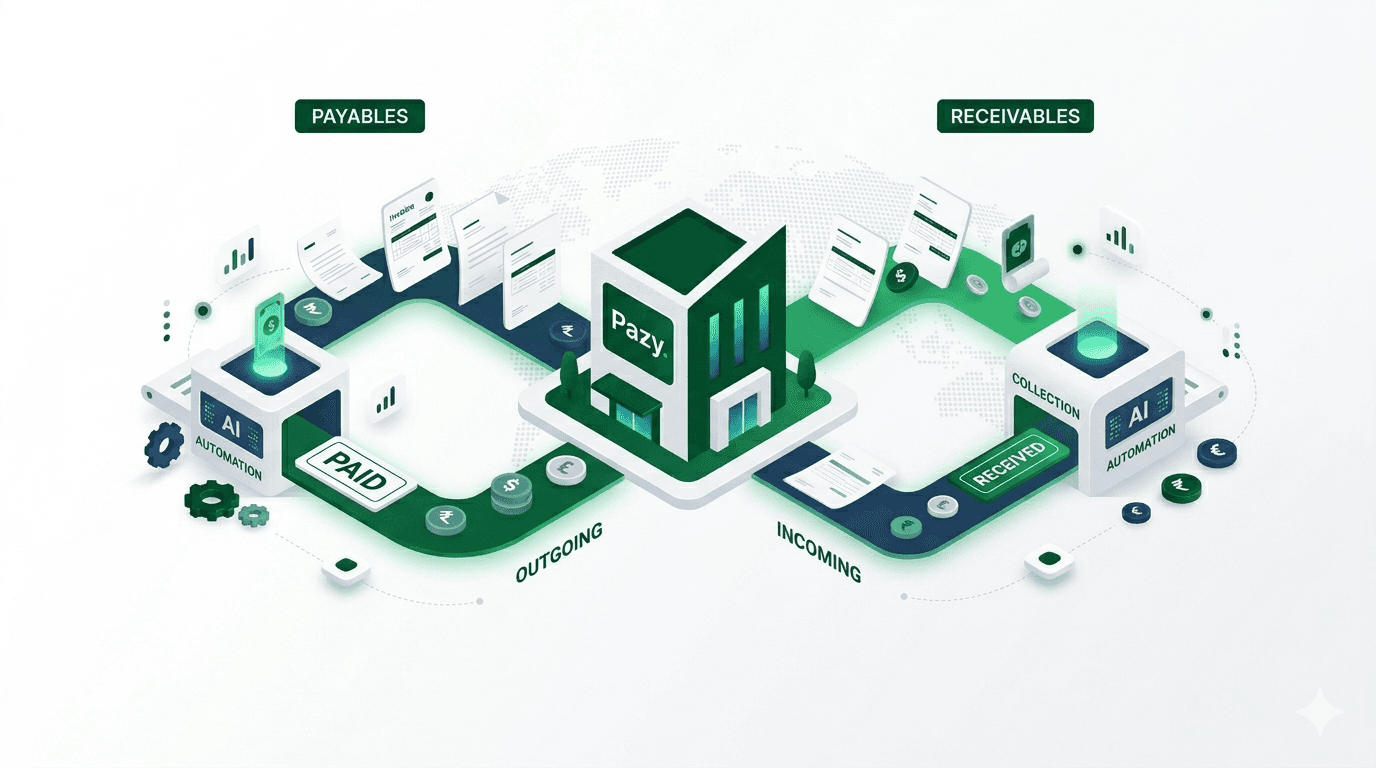
For comprehensive guides on related financial management topics, explore our resources on invoice automation, payables and receivables management, and accounts payable outsourcing to build a complete financial management framework for your organisation.
OTHER BLOGS